
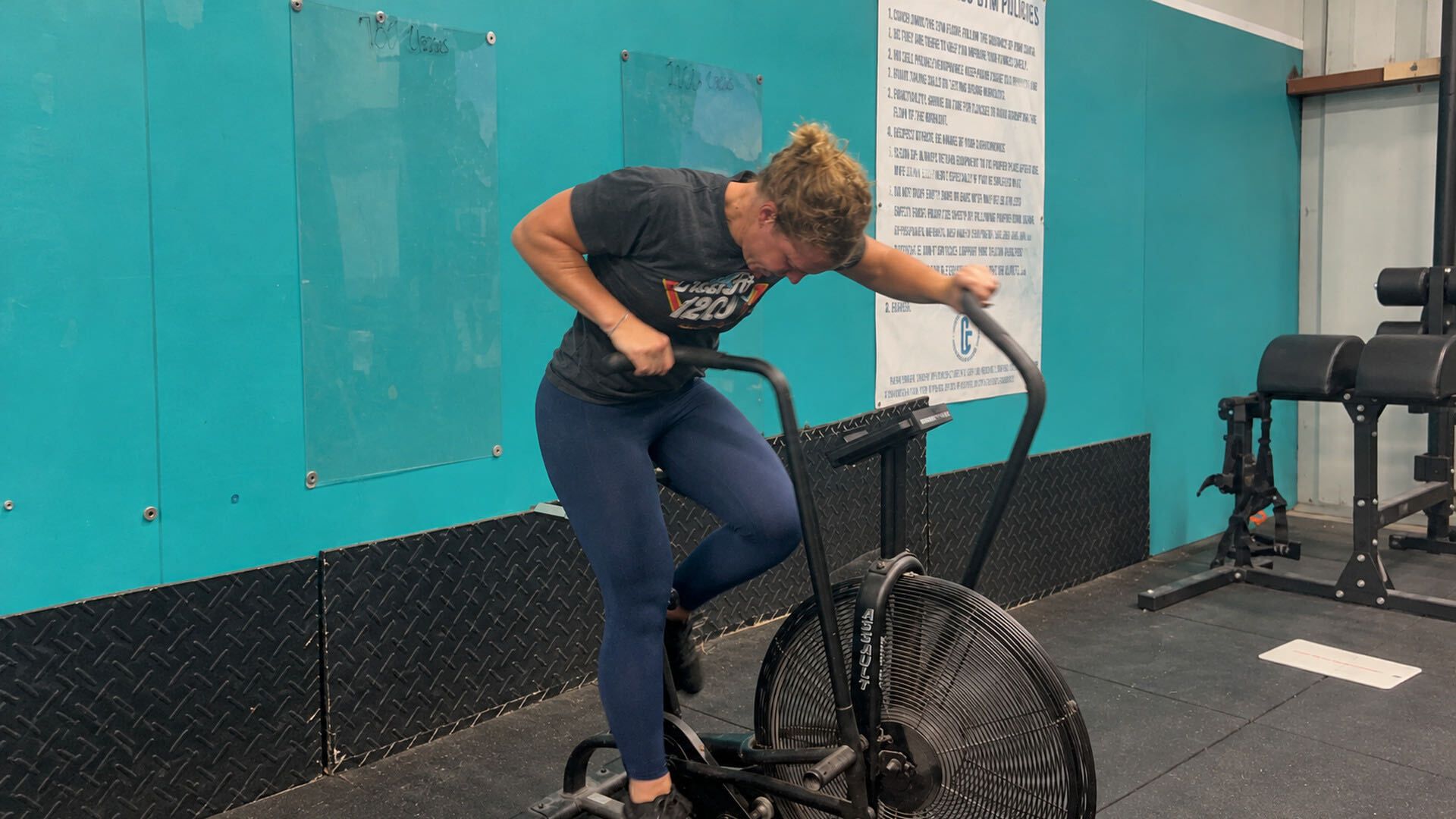
Most people who walk into a gym for the first time have an idea in their head about how this works. The longer the workout, the better it must be. The more volume, the faster you get to your goal. If you have ever thought that, you are in good company, and it is worth looking at what short hard efforts can do. That is the power of sprints.
Why Many People Think Long Workouts Are the Only Way
When most people come in, they believe one of two things. Either the longer the workout, the better it is for their fitness, or the more work they pile into a day, the faster they will get where they want to go. It makes sense on the surface. More time feels like more effort.
That belief is worth gently questioning. Long workouts have a place, but time on the clock is not the only thing that counts.
The Power of Sprints: What a Short Hard Effort Asks of Your Body
A sprint can be a 20 to 30 second effort. In a CrossFit setting, you will also see this inside regular workouts: you do some work, then you take a break, either by choice or because the workout forces it on you.
That pattern of hard work followed by rest is one of the best ways to burn fat and move toward the goals you are chasing. Low intensity work for hours on end is not necessarily the answer. There is a good place for it, but to really maximize results, you have to go to a high intensity. That means whatever high intensity is for you, not for the person next to you.
What Sprints Add That Easy Steady Exercise Often Does Not
Sprints can help you in the long term build capacity for longer cardio days, like a 5K or a 10K. A day of 10 by 100 meter sprints, for example, can feed into that.
To be honest about the limits, sprints are not the end all be all. You definitely need to do some longer runs too. But to get the most benefit, sprints are the way to go.
How Hard Is Hard Enough? Pacing, Rest, and Staying Safe
First, warm up properly. If you start cold and try to go straight to high speed, that is how people get injured.
Second, find your effort. In a typical class, I ask people to rate how they feel on a scale of 1 to 10. A 10 means “I can’t breathe,” and a 1 is very easy. That gives me a good gauge of how they are doing. If I feel it is too much, we scale it back for the day so we can keep building over the long term.
What a Beginner-Friendly Sprint Session Can Look Like
A sprint session starts with a very good warm-up so the body is warm. Then you take a couple of test sprints, starting around 50%, 60%, and 70% of your full speed.
Sprint does not necessarily mean running like you are in the Olympics. For a beginner, a sprint might be a fast walk. Everybody has their own sprint.
Take a session of 10 by 50 meter sprints. For somebody brand new, we may cut that down to 5 to 7, depending on how they are feeling.
Rest matters as much as the effort. For a fast sprint that takes about 10 seconds, we use a 3 to 1 rest to work ratio. So if it takes you 10 seconds, rest 30 seconds to a minute, so you are ready to hit the next one at the same intensity. For longer efforts the ratio shrinks. If you run 800 meters and it takes four minutes, we let you rest about four minutes.
If you are curious about trying this, talk to a coach at CrossFit 1209 and ask how to start at a level that fits you.

